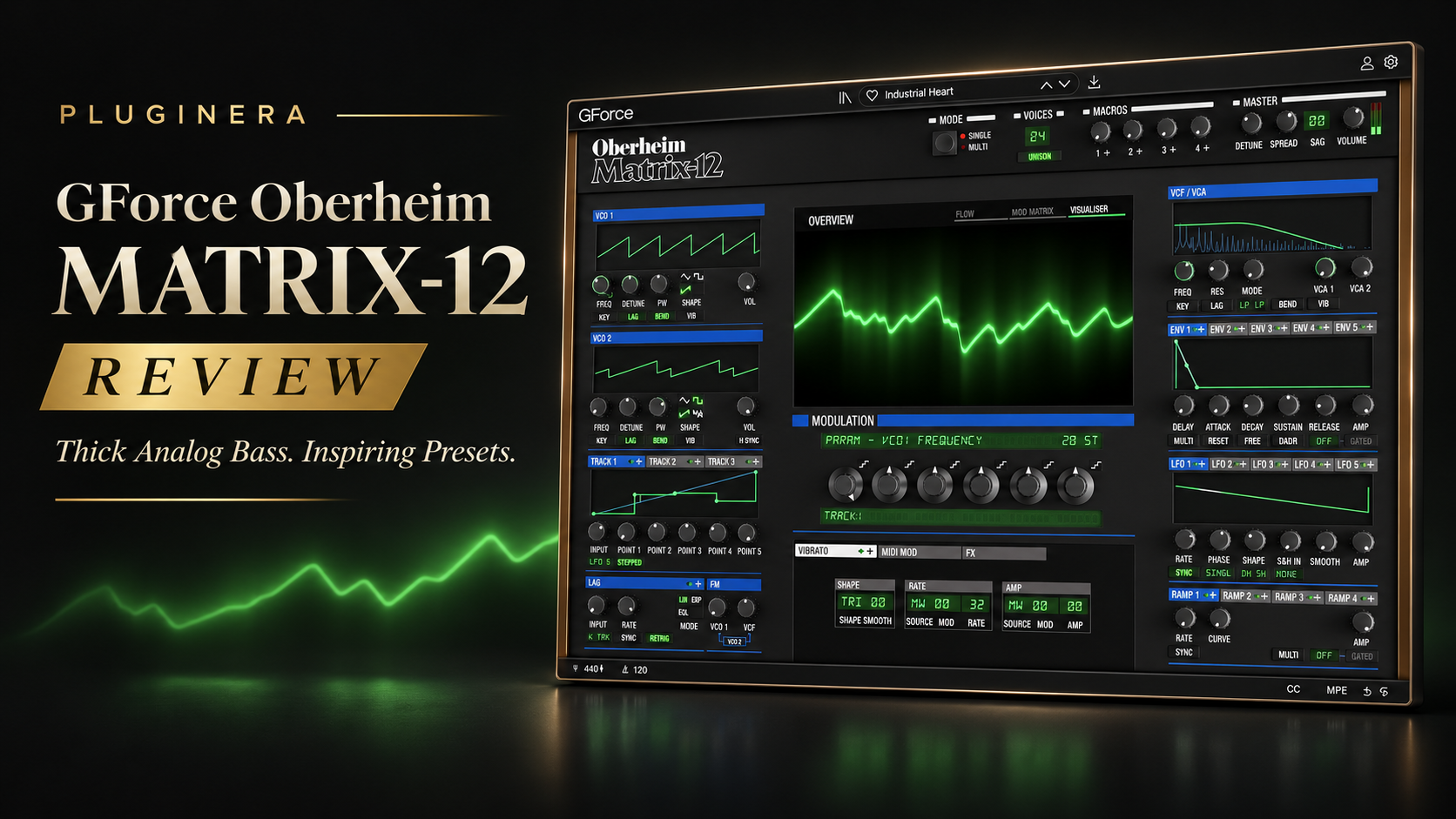
 GForce Oberheim Matrix-12 Review: Thick Analog Bass and Inspiring Presets
Some synthesizers make their strongest impression through an extensive feature list. Others catch your attention the moment you start playing.
After spending time with GForce Oberheim Matrix-12, the bass sounds were the standout. Thick, convincing, and full of analog character, they make a strong case for what this instrument can bring to a production.
The presets also offered plenty of sounds worth using, while the interface proved easy to navigate. For producers drawn to the synth-driven worlds of The Weeknd or Tame Impala, there is an appealing creative direction here.
This review combines those initial playing impressions with a look at the instrument’s features and buying value.
What Is GForce Oberheim Matrix-12?
GForce Oberheim Matrix-12 is an officially licensed software recreation developed with Oberheim and Marcus Ryle, one of the original instrument’s designers.
It features twelve voices, two modelled oscillators per voice, a fifteen-mode filter, and extensive modulation. GForce includes more than 570 patches, including over 190 original Matrix-12 and Xpander patches.
That depth gives it appeal beyond vintage synth nostalgia. Preset users have a substantial library to explore, while producers interested in customising sounds have room to go further.
Sound: The Bass Presets Make an Impression
The bass sounds were the highlight of this initial experience.
They have the kind of thick analog character that can make it difficult to identify the source as a plugin. That is a subjective listening impression rather than a blind comparison with hardware, but it speaks to how convincing these sounds felt while playing.
It also fits what makes GForce’s approach appealing: software instruments that invite you to focus on the sound rather than the fact that you are using an emulation.
For producers, the practical attraction is finding a bass sound that immediately suggests a musical direction. Matrix-12 delivered that sense of possibility here.
That does not mean every bass preset will suit every arrangement. A substantial sound still needs to work with the kick, chords, and vocal. But as a source of inspiring starting points, the bass selection made a particularly strong impression.
Presets You Can Imagine Using
A large preset count only matters if the sounds connect with the music you want to make.
In this case, many of the presets felt immediately usable. The creative reference points were The Weeknd and Tame Impala: music where synthesizers can establish the identity and atmosphere of a track.
That is a stylistic association, not a claim that these artists used this plugin or that its patches recreate particular songs. It describes the kinds of productions the sounds brought to mind.
For Pluginera readers working in R&B, alternative pop, or synth-driven music, that is a useful distinction. The appeal is not simply owning another collection of vintage sounds. It is finding patches that suggest parts, arrangements, and songs.
The initial experience was encouraging on that front.
Interface: Easy to Navigate
Despite its depth, the interface was easy to navigate during this initial exploration. Moving around the instrument did not feel frustrating.
That matters because a capable synth can lose its appeal if basic interaction becomes a chore. Here, the experience of exploring sounds supported the enjoyment of playing them.
GForce provides drag-and-drop modulation alongside Flow, Mod Matrix, and Visualiser views to help users inspect and edit a patch.
Those tools give users several ways to approach the instrument. However, straightforward navigation should not be confused with having mastered every programming option. The positive finding here is that getting into the plugin and exploring it felt comfortable.
For preset-focused producers, that accessibility is valuable on its own.
Depth for Producers Who Want to Explore Further
Beyond its presets, Matrix-12 offers considerable programming and performance flexibility.
Its Multi mode supports six overlapping keyboard zones, each with its own voice allocation, MIDI channel, and micro arpeggiator. MPE support, four global macros, stereo delay, and matrix reverb expand its performance and effects options.
The potential benefit is room to grow. You can begin by finding sounds that inspire you, then investigate layering, expression, and modulation when a project calls for them.
These deeper functions were not the basis of the initial verdict. The purchase satisfaction came primarily from the sounds, usable presets, and approachable navigation.
GForce Matrix-12 vs. Arturia Matrix-12
A direct comparison with Arturia’s Matrix-12 is a natural next step, particularly for producers who already own that instrument.
A dedicated shootout is still needed before making a judgement about their relative sound, workflow, or value. This review does not establish that GForce is more accurate or that it should replace Arturia.
The positive impression stands on its own: GForce’s bass sounds were convincing, many presets felt useful, and the interface was easy to navigate.
For existing Arturia users, the buying question is whether GForce offers enough additional inspiration or a preferred workflow to justify owning both. That deserves a focused comparison rather than an assumed winner.
Price and Value
The previously checked Plugin Boutique listing showed $83.99, reduced from $119.99. Treat that as a pricing reference and check the current offer before purchasing.
From this initial owner experience, satisfaction with the purchase is extremely high.
That enthusiasm is grounded in specific strengths: thick bass sounds, presets that suggest real musical uses, and an interface that does not get in the way of exploring them.
Value will still depend on your existing collection. Producers who already have several capable synths should judge whether this particular sound palette adds something they want to use.
Pros
- Thick analog-style bass sounds were a standout.
- Many presets felt usable and creatively inspiring.
- Easy navigation made exploring the instrument enjoyable.
- Strong stylistic appeal for synth-driven R&B, alternative pop, and psychedelic pop.
- Extensive programming options offer room for deeper exploration.
Considerations Before Buying
- A direct Arturia comparison is still needed before drawing conclusions between the two.
- Initial impressions do not establish hardware accuracy or CPU efficiency.
- Producers with extensive synth collections should audition it for a specific musical role.
- Deeper programming will require more exploration than browsing presets.
Who Is It For?
GForce Oberheim Matrix-12 is worth considering if you want convincing analog-style basses and presets that can spark a synth-driven production.
It is especially appealing if your musical interests overlap with the moods and textures associated with The Weeknd or Tame Impala.
Preset users should not dismiss it because of its depth. The initial experience suggests that you can enjoy exploring the sounds without immediately learning every part of the modulation system.
Existing Arturia users have a more specific decision to make. Audition GForce for its own sound and workflow, then decide whether those differences matter to your music.
The Pluginera Verdict
GForce Oberheim Matrix-12 made an excellent first impression, with its thick bass sounds leading the way.
Many presets felt like sounds worth using in actual productions, and the interface made exploration comfortable. Together, those qualities produced an extremely satisfying purchase.
More time is needed for a detailed Arturia shootout and deeper performance assessment. But the initial verdict is clear: this is an inspiring instrument that has already justified further attention.
If its musical direction appeals to you, download the trial and start with the bass presets. They were the highlight here.
Check the Current Price of GForce Oberheim Matrix-12 at Plugin Boutique
Related Reading
Keep exploring tools and techniques for your next R&B or hip-hop production:
- How to Make ’90s R&B Beats in Reason — Explore how to bring classic R&B inspiration into your Reason workflow.
- Rupert Neve Designs 542 Tape Emulator Review — Considering another way to add character to your productions? Read our look at this tape-emulation plugin.