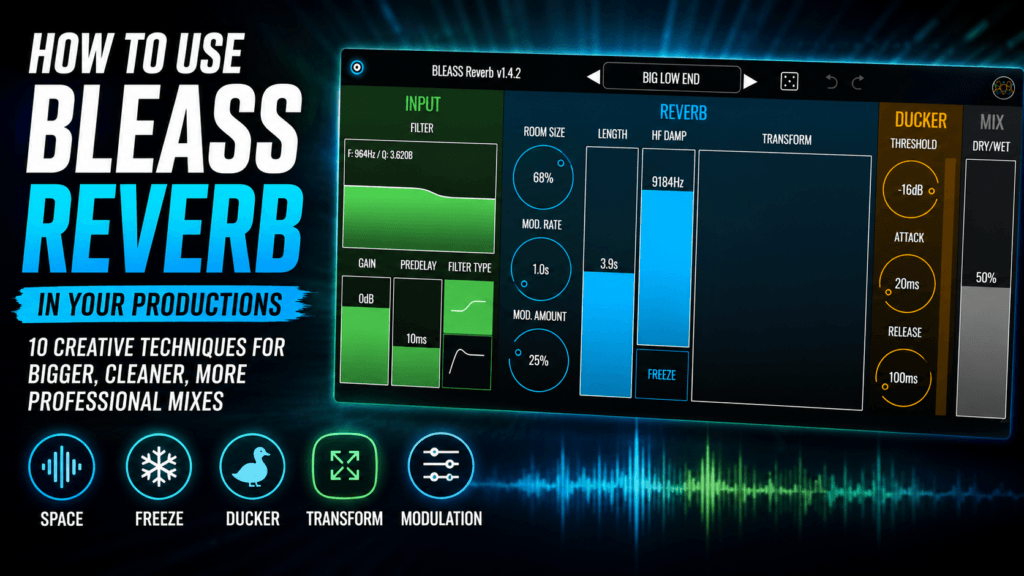
 How to Use BLEASS Reverb in Music Production: 10 Creative Techniques for Bigger, More Professional Mixes
Reverb is much more than an effect that makes sounds feel larger. When used creatively, it becomes an instrument in its own right—adding movement, emotion, and depth to your productions.
BLEASS Reverb stands out because it combines high-quality algorithmic reverb with modern sound design tools like modulation, ducking, Freeze, and an expressive X/Y Transform pad. Instead of simply placing sounds in a room, it gives producers the ability to create evolving textures and cinematic spaces.
Whether you produce hip-hop, R&B, trap, pop, EDM, or cinematic music, here are ten practical ways to incorporate BLEASS Reverb into your productions.
1. Give Your Lead Vocals Space Without Losing Clarity
One of the biggest challenges in modern music is making vocals sound spacious while keeping every word intelligible.
BLEASS Reverb’s built-in Ducker automatically lowers the reverb level while the vocalist is singing and lets the ambience bloom naturally between phrases.
Great settings:
- Room Size: 40–60%
- Decay: 2–3 seconds
- Mix: 15–20%
- Enable Ducker
- Medium attack and release
This keeps vocals clean while still sounding polished and professional.
2. Make Trap Snares Sound Huge
Trap snares often rely on short reverbs to create impact.
Instead of using a long hall reverb, try:
- Small room
- Short decay
- Slight modulation
- High-pass filter around 300 Hz
You’ll add excitement without muddying your drum bus.
3. Turn Synth Pads Into Cinematic Textures
BLEASS Reverb excels on pads because its modulation keeps the reverb moving over time.
Try experimenting with:
- Larger room sizes
- Longer decay times
- Increased modulation amount
- Moderate stereo width
The result is a pad that evolves naturally instead of sounding static.
4. Create Ambient Intros with Freeze
The Freeze function is one of the plugin’s standout features.
Here’s a simple workflow:
- Play a chord.
- Add BLEASS Reverb.
- Increase the decay.
- Press Freeze.
- Record the sustained texture.
- Build your beat underneath it.
This creates lush intros without needing additional synth layers.
5. Design Unique Transitions
Instead of downloading transition effects, make your own.
Use BLEASS Reverb on:
- Reverse cymbals
- Vocal chops
- Piano hits
- FX samples
Automate the Room Size, Mix, or Transform controls to create dramatic builds leading into a chorus or beat drop.
Custom transitions help your productions stand out.
6. Add Width to Melody Loops
Many melodies sound narrow when left dry.
Adding a subtle amount of BLEASS Reverb can make them feel much wider.
Good starting point:
- Mix: 10–15%
- Short decay
- Gentle modulation
- Light high-frequency damping
This works especially well on:
- Pianos
- Bells
- Guitar
- Rhodes
- Plucks
7. Build Atmospheric Background Layers
BLEASS Reverb can transform simple sounds into evolving background textures.
Try processing:
- Vocal ad-libs
- Guitar harmonics
- Piano chords
- One-shot samples
- Field recordings
Then automate the plugin throughout the arrangement for constant movement.
These subtle layers add depth without competing with the lead instruments.
8. Use the X/Y Transform Pad for Automation
The Transform pad is where BLEASS Reverb becomes a creative tool rather than just a mixing effect.
Automate movements across the X/Y pad during:
- Song intros
- Beat switches
- Bridges
- Outros
- Build-ups
Instead of static ambience, your reverb becomes part of the performance.
Small movements can dramatically change the tone and character of the effect.
9. Keep Your Mix Clean with Input Filtering
One mistake many producers make is sending too much low end into a reverb.
BLEASS Reverb includes built-in input filtering that lets you remove unnecessary frequencies before they reach the reverb engine.
A good starting point is:
- High-pass around 200–300 Hz for vocals
- Slight low-pass for bright synths if the reverb sounds harsh
This simple adjustment can make your mixes sound much more professional.
10. Create Dreamy R&B and Trap Soul Atmospheres
If you produce modern R&B or trap soul, BLEASS Reverb is an excellent creative tool.
Apply it to:
- Electric pianos
- Rhodes
- Guitar melodies
- Background vocals
- Ambient vocal chops
- Soft synths
Combine long decay times with gentle modulation and moderate ducking to create lush, emotional soundscapes that support the vocal without overwhelming it.
Workflow Tips for Better Results
To get the most out of BLEASS Reverb:
- Use sends instead of inserting reverb on every track to save CPU and create a cohesive space.
- Match decay time to the tempo of your song—shorter for fast tracks, longer for slower ballads.
- Automate the Dry/Wet mix to increase ambience during transitions and reduce it during verses.
- Experiment with subtle modulation to keep long reverb tails from sounding repetitive.
- A little goes a long way. Small adjustments often sound more polished than extreme settings.
Common Mistakes to Avoid
Even a great reverb can hurt your mix if it’s overused.
Avoid these common pitfalls:
- Using too much wet signal on lead vocals
- Letting low frequencies build up in the reverb
- Applying long decay times to every instrument
- Ignoring the Ducker when mixing dense arrangements
- Leaving the Transform pad static when it could add movement
Keeping these in mind will help your productions stay clean, dynamic, and engaging.
Final Thoughts
BLEASS Reverb is much more than a standard ambience plugin. Its combination of intuitive controls, built-in ducking, modulation, Freeze, and the expressive X/Y Transform pad makes it a versatile creative tool for today’s producers.
Whether you’re widening melodies, designing transitions, adding depth to vocals, or building cinematic intros, BLEASS Reverb can help your music sound larger, more polished, and more memorable. With a little experimentation, it quickly becomes one of those plugins you’ll reach for in nearly every session.
For beat makers and producers working in hip-hop, R&B, trap, pop, or electronic music, BLEASS Reverb offers an inspiring balance of simplicity and creative potential.