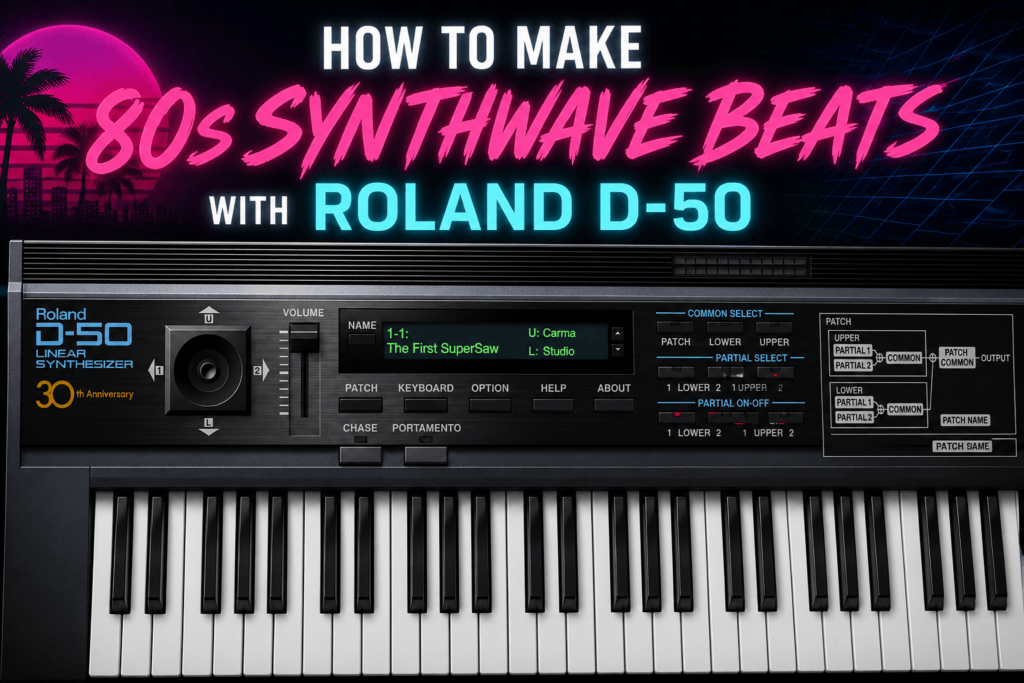
 How to Make 80s Synthwave Beats with Roland D-50
The unmistakable sound of the 1980s is making a huge comeback. From blockbuster movie soundtracks to modern artists like The Weeknd, The Midnight, FM-84, and Gunship, synthwave has evolved from a nostalgic niche into one of today’s most inspiring genres.
At the center of that sound is the Roland D-50.
Originally released in 1987, the D-50 became famous for its lush digital pads, shimmering bells, atmospheric textures, and cinematic presets. Thanks to Roland Cloud, producers can now recreate those legendary sounds inside their favorite DAW without hunting down vintage hardware.
If you’ve ever wanted to create authentic ’80s-inspired music, here’s how to make synthwave beats using the Roland D-50.
Why the Roland D-50 Is Perfect for Synthwave
Unlike analog synths that focus on thick oscillators and aggressive filters, the Roland D-50 uses Linear Arithmetic (LA) synthesis, blending sampled attacks with synthesized sustain waves.
This gives the instrument its signature sound:
- Dreamy evolving pads
- Crystal-clear bells
- Cinematic textures
- Glassy electric pianos
- Airy choirs
- Digital strings
These sounds instantly transport listeners back to the late ’80s while still feeling fresh in modern productions.
Step 1: Set Your Tempo
Most synthwave tracks sit between:
- 80–100 BPM for cinematic and emotional tracks
- 100–115 BPM for upbeat retro pop
- 115–125 BPM for outrun-inspired productions
A great starting point is:
95 BPM
This tempo leaves plenty of room for lush chords while maintaining a steady groove.
Step 2: Choose the Right Drum Sounds
Synthwave drums borrow heavily from classic drum machines.
Look for sounds inspired by:
- LinnDrum
- Roland TR-707
- Roland TR-909
- Simmons electronic toms
- Oberheim DMX
Focus on:
- Deep gated snares
- Tight kicks
- Bright hi-hats
- Electronic tom fills
- Layered claps
Adding a large gated reverb to the snare instantly creates that iconic ’80s atmosphere.
Step 3: Start with a Classic D-50 Pad
The Roland D-50 is famous for its lush pads.
Some legendary presets include:
- Fantasia
- Soundtrack
- Glass Voices
- Staccato Heaven
- Living Calliope
Choose one of these as the foundation of your track.
Play sustained chords and allow the sound to evolve naturally.
The movement inside these patches creates depth without requiring multiple layered instruments.
Step 4: Write Emotional Chord Progressions
Synthwave thrives on nostalgic harmony.
Try a progression like:
Am – F – C – G
Or in E minor:
Em – C – G – D
Another cinematic progression:
Dm – Bb – F – C
Instead of playing simple triads, experiment with:
- Major 7ths
- Minor 7ths
- Suspended chords
- Add9 chords
The D-50 responds beautifully to richer voicings.
Step 5: Layer Multiple Sounds
Classic ’80s productions rarely relied on a single patch.
Try stacking:
Layer 1
- Fantasia pad
Layer 2
- Glass Voices
Layer 3
- Digital bell
Layer 4
- Warm analog bass
This creates enormous stereo width while preserving clarity.
Step 6: Add an Iconic Bassline
While the D-50 excels at pads and textures, synthwave bass often comes from analog-style synths.
Use:
- Saw waves
- Square waves
- Filtered bass patches
- Moog-inspired sounds
Keep the bass simple.
Repeated eighth notes often work better than overly complex basslines.
The goal is to support the chords without distracting from the melody.
Step 7: Create a Memorable Lead
Once your chords are established, use another D-50 patch for the main melody.
Great choices include:
- Digital bells
- Expressive synth leads
- Glassy keys
- Bright digital plucks
Keep the melody emotional rather than flashy.
Synthwave often relies on memorable hooks built from only a handful of notes.
Step 8: Use Big Reverbs and Delays
Effects are a huge part of the synthwave sound.
Apply:
Reverb
Large hall reverbs help create cinematic space.
Pads should feel endless.
Delay
Use stereo delays synced to the project tempo.
Quarter-note and dotted-eighth delays are excellent starting points.
Chorus
Many classic ’80s synth sounds relied heavily on chorus.
Adding subtle modulation creates extra width and movement.
Step 9: Build the Arrangement
A simple synthwave structure might look like this:
Intro (8 Bars)
- Ambient pad
- Noise sweep
- Bell melody
Verse (16 Bars)
- Drums enter
- Bass joins
- Chords continue
Chorus (16 Bars)
- Full drums
- Layered pads
- Main lead melody
Breakdown
Strip the drums away.
Let the D-50 pad carry the emotion before rebuilding energy.
Final Chorus
Bring every layer back together with additional harmonies and effects.
Step 10: Mix for Warmth
Modern productions often sound overly bright.
To achieve an authentic synthwave mix:
- Roll off harsh highs above 15–16 kHz where appropriate.
- Add gentle tape saturation.
- Use bus compression for glue.
- Keep stereo pads wide.
- Center the kick, bass, and snare.
- Avoid excessive limiting—leave room for dynamics.
The D-50 already has a polished, spacious character, so let its natural tone shine.
Pro Tips for Authentic 80s Synthwave
- Start with the factory presets before designing your own sounds.
- Use automation to let pads evolve over time.
- Double melodies an octave higher for extra excitement.
- Layer analog bass beneath digital pads for contrast.
- Don’t over-quantize every note—small timing variations add a human feel.
- Use cinematic transitions such as reverse cymbals, filtered noise sweeps, and tom fills to keep the arrangement moving.
Why Producers Still Love the Roland D-50
Nearly four decades after its release, the Roland D-50 continues to inspire producers because it offers something many modern synths don’t: instant character.
Its evolving textures, lush effects, and unmistakable digital tone can transform a simple chord progression into a cinematic soundscape. Whether you’re creating nostalgic synthwave, dreamy pop, ambient music, or cinematic scores, the D-50 remains one of the most expressive software instruments available.
Final Thoughts
The Roland D-50 isn’t just a vintage synth—it’s a cornerstone of the synthwave sound. Its iconic presets, lush digital pads, and expressive textures make it an ideal choice for producers looking to capture the atmosphere of the late ’80s while creating music that feels current.
Whether you’re producing instrumental synthwave, cinematic scores, or adding retro flair to modern pop and R&B, the D-50 gives you a palette of timeless sounds that still hold up in 2026.
If you’re chasing authentic retro vibes without sacrificing modern workflow, the Roland D-50 is one of the best software synths you can add to your studio.